Part 5 of 21
Imagine you're at a toll booth. One lane. Thousands of cars. Every driver has to stop, pay, get a receipt, and wait for the barrier to lift before the next car can go. That's Ethereum — secure, reliable, but slow. Now imagine a highway with thousands of lanes, cars flying through at 200 mph, paying tolls wirelessly without ever slowing down. That's the promise of Solana.
In Part 4, we explored Ethereum and why it's the backbone of decentralized applications. But we also touched on its Achilles' heel: speed and cost. Ethereum handles about 15 transactions per second (TPS). Visa handles around 65,000. For crypto to go mainstream, something had to bridge that gap.
Enter Solana — the blockchain that said "what if we just made it fast?"
The Speed Problem (And Why It's Hard to Fix)
Here's the fundamental tension in blockchain design: security, decentralization, and speed — pick two. This is called the "blockchain trilemma," and every chain makes different tradeoffs.
Ethereum chose security and decentralization. The result? Rock-solid, trustworthy, but expensive and slow. When demand spikes, gas fees can hit $50+ for a simple swap.
Solana's bet was different. What if you could get all three — but lean hard into speed while still keeping things secure enough? The founder, Anatoly Yakovenko, was a former Qualcomm engineer. He didn't come from crypto culture. He came from building systems that process data at telecom scale. And he brought that mindset to blockchain.
The result: Solana can handle thousands of transactions per second with finality in about 400 milliseconds. Fees? Usually a fraction of a cent. We're talking $0.00025 per transaction.
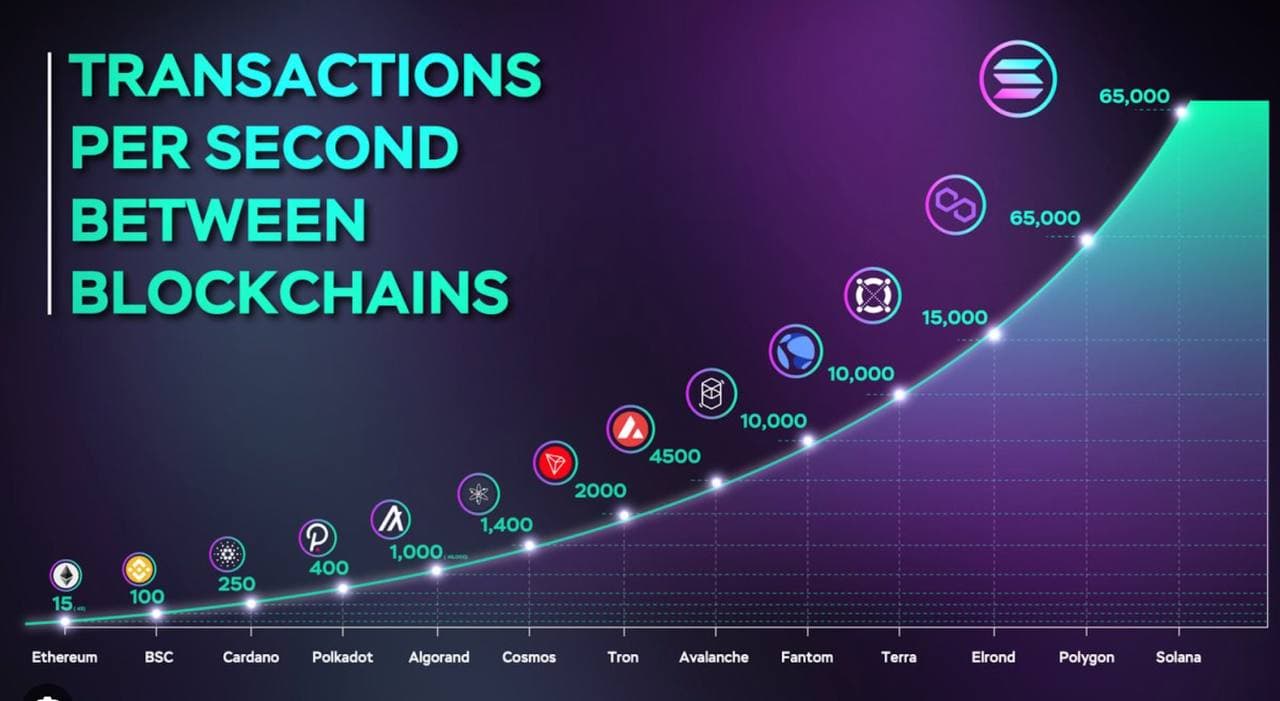
Let that sink in. On Ethereum, a token swap might cost you $5-50. On Solana, it costs less than a thousandth of a penny.
Proof of History: Solana's Secret Sauce
Every blockchain needs a way to agree on the order of transactions. Bitcoin and Ethereum do this through consensus — validators communicate back and forth to agree on what happened and when. It works, but all that communication takes time.
Solana's innovation is called Proof of History (PoH). Think of it like this:
Imagine a factory assembly line. Instead of workers stopping to check with each other about what order to do things, there's a giant clock on the wall that everyone can see. Each worker timestamps their task and moves on. No meetings. No debates. Just look at the clock and keep working.
That's PoH in a nutshell. It's a cryptographic clock — a verifiable sequence of hashes that proves that time has passed between events. Validators don't need to talk to each other to agree on when things happened. The timestamps are baked right into the data.
This alone doesn't make Solana fast. It's one of eight innovations working together (including Tower BFT for consensus, Gulf Stream for transaction forwarding, and Turbine for block propagation). But PoH is the foundation that makes everything else possible.
Beginner tip: You don't need to understand the technical details of PoH to use Solana. Just know that it's the reason transactions feel instant and cost almost nothing. The engineering is doing the heavy lifting so you don't have to think about it.
What Sub-Second Finality Actually Means For You
Let's get practical. Here's what Solana's speed means in real life:
- Swapping tokens feels like using a normal app. Click, confirm, done. No waiting 15 seconds for a block, no praying your transaction doesn't get stuck.
- NFT minting can handle thousands of people minting simultaneously without the network grinding to a halt (most of the time — more on that later).
- DeFi trading on Solana feels closer to a centralized exchange. Limit orders, instant fills, real-time price updates.
- Micropayments become viable. When a transaction costs $0.00025, you can send someone a penny without the fee being 100x the amount.
- Gaming and social apps can put actions on-chain that would be absurdly expensive on Ethereum.
This isn't just a nice-to-have. It unlocks entirely new categories of applications that simply can't exist on slower chains.
The Solana Ecosystem: Who's Building Here?
Solana has attracted a massive ecosystem. Here are the heavy hitters:
- Jupiter — The go-to swap aggregator, self-described as "The DeFi Superapp." Think of it as Solana's Google for finding the best token prices. It routes your trade across multiple exchanges to get you the best deal. Jupiter has become the DeFi hub on Solana.
- Raydium — One of the first major decentralized exchanges (DEXs) on Solana. It pioneered the AMM (automated market maker) model on the chain and remains a cornerstone of Solana DeFi.
- Marinade Finance — Liquid staking for SOL. Stake your SOL, get mSOL in return, and keep using that mSOL in DeFi while earning staking rewards. Best of both worlds.
- Jito — MEV (maximal extractable value) infrastructure and liquid staking. More advanced, but important for how the network's economics work under the hood.
- Tensor — The leading NFT marketplace on Solana. Fast, trader-friendly, with real-time floor price tracking and instant listings.
- Magic Eden — Started on Solana, expanded to other chains. One of the biggest NFT marketplaces in crypto.
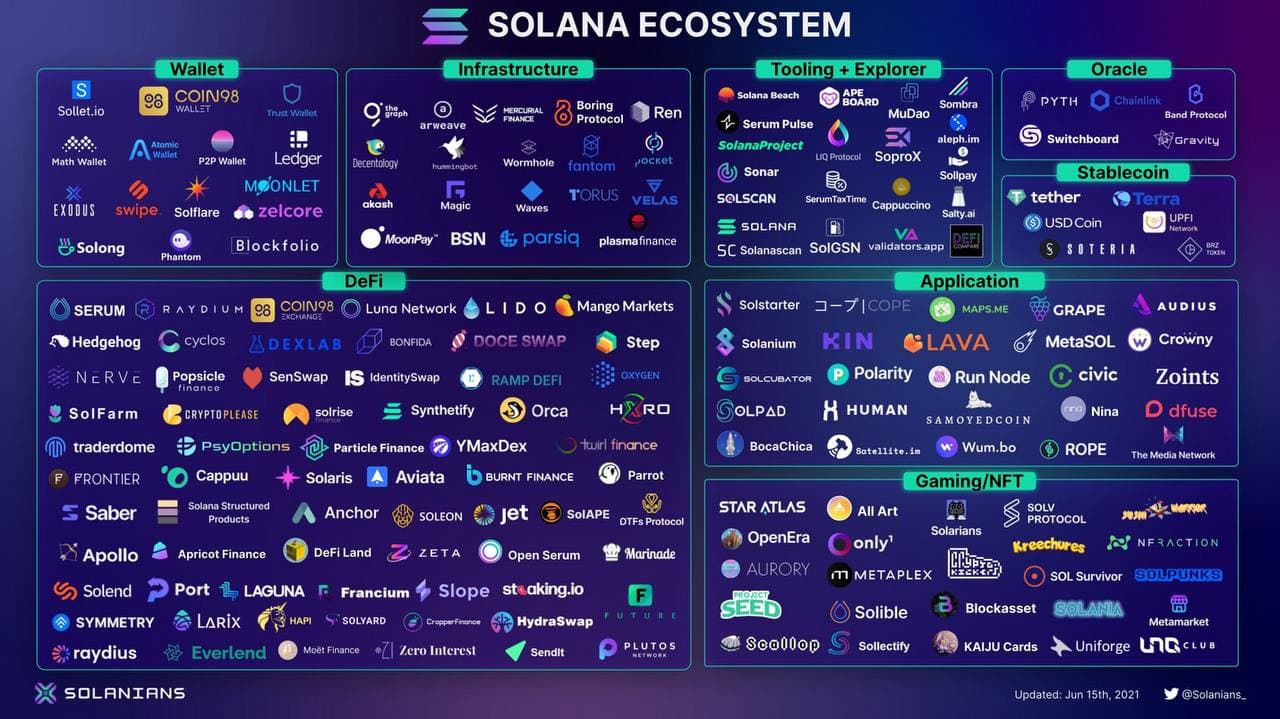
And hundreds more — from gaming studios to payment processors to social platforms like the decentralized Twitter alternatives being built on Solana's infrastructure.
The Saga Phone and Going Mobile-First
In April 2023, Solana Mobile — a subsidiary of Solana Labs — did something no other blockchain had seriously attempted: they shipped a phone. The Saga was an Android device with a built-in crypto wallet, a seed vault for secure key storage, and a dApp store.
The first Saga was... a tough sell at $1,000. Sales were slow. Critics called it a gimmick. Then a massive BONK airdrop to Saga holders made the phone worth more than its retail price overnight, and suddenly they were selling on eBay for $2,000+.
The Seeker (Saga's successor) learned from this. More affordable, better specs, and the promise of exclusive token drops and app experiences. The thesis is bold: crypto needs to be mobile-native, not just mobile-compatible. Most of the world accesses the internet through phones, not laptops. If crypto wants mass adoption, it needs to meet people where they are.
Whether or not Solana's phone strategy succeeds, the thinking behind it is sound. And the pre-orders for Seeker suggest plenty of people are betting it will.
Beyond phones, Solana is making inroads with traditional finance. In September 2023, Visa announced it had added Solana blockchain support for sending USDC stablecoin payments to merchants — a significant vote of confidence from one of the world's largest payment networks.
The Rocky Road: Outages, FTX, and the Comeback
Let's address the elephant in the room. Solana's history isn't all speed records and smooth sailing.
The outages. Between September 2021 and late 2022, Solana experienced multiple network outages — full stops where the chain just... didn't work. The first major one in September 2021 lasted 17 hours after a transaction surge caused the network to fork. In 2022, there were at least three more: a seven-hour bot-induced shutdown in May, a four-and-a-half-hour bug-related outage later that month, and a six-hour consensus bug in October. For a chain marketing itself as the future of high-speed finance, going offline is about the worst look possible.
The FTX connection. Sam Bankman-Fried's FTX and Alameda Research were massive Solana backers. FTX alone held $982 million in SOL tokens, and it was Alameda's second-largest holding. When FTX collapsed in November 2022, SOL's price dropped 40% in a single day, eventually sliding from ~$35 to under $10. The entire ecosystem was painted with the FTX brush. Many wrote Solana's obituary.
The comeback. And yet, here we are. SOL recovered and then some. The network stabilized — outages became rare, then almost nonexistent. The developer community didn't leave. New projects kept launching. The FTX estate's SOL holdings were gradually sold without crashing the market. And Solana emerged from the bear market arguably stronger than it went in.
The lesson here? In crypto, narratives shift fast. The "dead chain" of 2022 became the hottest ecosystem of 2024-2025. Don't write off a project based on a single chapter of its story.
SOL Tokenomics and Staking
SOL is Solana's native token. Here's what you need to know:
- Initial supply: ~500 million SOL at launch
- Inflation: SOL has an inflationary model, starting at ~8% annually and decreasing by 15% each year until it reaches a long-term rate of ~1.5%
- Staking yield: Stakers earn rewards from this inflation. Current yields hover around 6-7% APY
- Burn mechanism: 50% of all transaction fees are burned (destroyed), creating some deflationary pressure
- Use cases: Pay transaction fees, stake for network security, governance participation
Staking SOL is straightforward. You can delegate to a validator directly through wallets like Phantom or Solflare. Or use liquid staking (Marinade, Jito) to keep your SOL productive while it's staked.
Beginner tip: If you're holding SOL and not staking it, you're leaving money on the table. Liquid staking through Marinade or Jito lets you earn staking rewards and use your staked SOL in DeFi simultaneously.
Solana vs Ethereum: Different Beasts, Different Tradeoffs
This isn't a war. It's a design spectrum. Here's how to think about it:
- Speed — Ethereum: ~15 TPS (base layer) · Solana: ~4,000+ TPS
- Fees — Ethereum: $0.50 - $50+ · Solana: $0.00025
- Finality — Ethereum: ~12 minutes · Solana: ~400ms
- Decentralization — Ethereum: ~900,000+ validators · Solana: ~1,800 validators
- Hardware requirements — Ethereum: Consumer laptop · Solana: High-end server
- Philosophy — Ethereum: Decentralization first · Solana: Performance first
Ethereum's validator set is massive and can run on modest hardware. That's deeply decentralized. Solana validators need beefy machines (high RAM, fast CPUs, enterprise-grade internet). That means fewer validators and a more centralized network.
Is that a problem? Depends who you ask. Ethereum maxis say yes — decentralization is the whole point. Solana believers argue that 1,800 validators is plenty decentralized, and that nobody cares about decentralization if the network is too slow and expensive to use.
The truth? Both are right. Different applications need different tradeoffs. Settling a $10 million institutional trade? You probably want Ethereum's battle-tested security. Buying a coffee with crypto? You want Solana's speed and near-zero fees.
The future isn't one chain to rule them all. It's horses for courses.
The Memecoin Explosion: Pump.fun and the Solana Casino
No honest Solana article can skip this. In 2024, Solana became ground zero for the memecoin explosion, largely thanks to pump.fun — a platform that let anyone launch a token in seconds with minimal cost. The trend reached a fever pitch in January 2025 when US President Donald Trump launched his own $TRUMP memecoin on Solana, briefly pushing SOL to a new all-time high of $294.
The result was absolute chaos. Thousands of tokens launched daily. Some made people rich overnight. Most went to zero in hours. Dog coins, cat coins, political coins, coins based on typos — if you could think of it, someone already launched it.
Was this good for Solana? It's complicated:
- The bull case: It proved Solana's tech works at scale. Millions of transactions, millions of users, the network handled it. It onboarded a massive wave of new users who'd never touched DeFi before.
- The bear case: It attracted scammers, rug pulls, and speculation that made crypto look like a casino. The "Solana is for gambling" narrative wasn't exactly the brand the foundation wanted.
Love it or hate it, the memecoin era proved something important: when you make transactions fast and cheap, people will actually use blockchain. Whether they use it for Nobel Prize-worthy innovations or dog-themed gambling tokens... well, that's humanity for you.
The Big Picture
Solana represents a different philosophy in crypto. Where Ethereum says "we'll scale carefully, layer by layer, never compromising on decentralization," Solana says "let's make this thing fast enough that regular people actually want to use it, and figure out the rest as we go."
Both approaches have merit. Both have risks. And both are pushing the entire industry forward.
If you're new to crypto, Solana is worth exploring. Set up a Phantom wallet, grab some SOL, try a swap on Jupiter, mint an NFT on Tensor. The experience will feel remarkably different from Ethereum — and that contrast will teach you more about blockchain tradeoffs than any article can.
What's Next?
We've now covered Bitcoin, Ethereum, and Solana — three very different blockchains with three very different philosophies. But here's the thing: none of them exist in isolation. In Part 6: The Multi-Chain World, we'll explore how these chains connect, what bridges and interoperability actually mean, and why the future of crypto isn't about picking a winner — it's about all of them working together.
See you there. 🔗
Stay Updated
Get notified about new posts on automation, productivity tips, indie hacking, and web3.
No spam, ever. Unsubscribe anytime.