
Part 19 of 21
Two years ago, if you told a Wall Street banker that BlackRock would be begging the SEC for a Bitcoin ETF, they'd have laughed you out of the room. If you told them Bitcoin would crack $100,000, they might have called security.
And yet — here we are.
The 2024-2025 stretch has been the most transformative period in crypto's short history. Not because of any single technology breakthrough, but because the entire narrative changed. Crypto stopped being the weird internet money your nephew wouldn't shut up about at Thanksgiving. It became a legitimate asset class that pension funds allocate to and presidents campaign on.
Let's walk through everything that happened, what it means, and where we're headed.
The ETF Big Bang
January 10, 2024 was crypto's moon landing moment. After a decade of rejections, the SEC finally approved spot Bitcoin ETFs — and not just one. Eleven launched simultaneously, with heavyweights like BlackRock (iShares Bitcoin Trust, ticker: IBIT) and Fidelity (Wise Origin Bitcoin Fund) leading the charge.
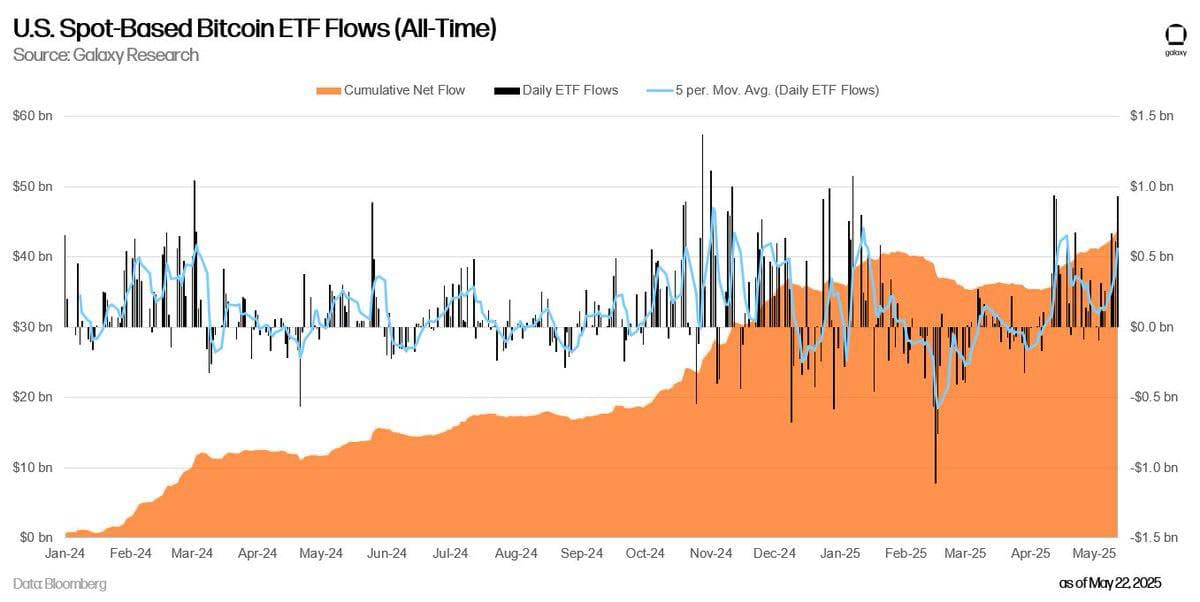
The numbers were staggering:
- BlackRock's IBIT became the fastest ETF in history to reach $10 billion in assets — doing so in roughly 49 days
- Within months, Bitcoin ETFs were pulling in more daily inflows than gold ETFs
- By the end of 2024, these products held over $100 billion in Bitcoin collectively
Why does this matter so much? Because an ETF is a wrapper. It lets your retirement account, your financial advisor, your grandma's brokerage — anyone with a traditional investment account — buy Bitcoin without dealing with wallets, seed phrases, or exchanges. It removed the last excuse institutional money had for staying on the sidelines.
Think of it this way: Before ETFs, buying Bitcoin was like buying a house directly — inspections, paperwork, risk of getting scammed. The ETF turned it into buying a REIT: same exposure, fraction of the hassle.
Bitcoin Breaks $100K
With institutional money pouring in and the April 2024 halving cutting new supply in half, Bitcoin did what many thought was inevitable but still felt surreal: on December 5, 2024, it crossed $100,000 for the first time.

This wasn't just a number. It was psychological. Six figures. The kind of price tag that makes front-page news, that gets your non-crypto coworkers asking questions at lunch, that makes politicians pay attention.
And pay attention they did. The 2024 US presidential election saw candidates from both parties publicly courting crypto voters. Bitcoin went from regulatory threat to political talking point seemingly overnight.
Ethereum Gets Its ETF (Sort Of)
Ethereum spot ETFs followed in mid-2024 — the SEC approved the key 19b-4 filings in May, with products beginning to trade in July. But there was a notable asterisk: no staking. The SEC approved the products but required issuers to hold plain ETH — no earning yield through staking.
This matters because staking is a core part of Ethereum's value proposition (we covered this in Part 9). Without it, Ethereum ETFs were a bit like buying a rental property but being told you can't collect rent. Still valuable for exposure, but leaving money on the table.
The staking question remains one of the biggest regulatory battles heading into 2026. If it gets resolved, expect a flood of new capital into ETH products.
Ethereum's Grand Roadmap
Speaking of Ethereum — it's been quietly executing one of the most ambitious technical roadmaps in software history. Vitalik Buterin laid it out in five phases, each with a delightfully nerdy name:
- The Surge — Massive scaling through rollups and sharding. The star here is EIP-4844 (Proto-Danksharding), which went live on March 13, 2024 as part of the Dencun upgrade and slashed Layer 2 transaction costs by up to 90%. If you used Base or Arbitrum recently and noticed fees measured in fractions of a cent — that's EIP-4844 at work.
- The Scourge — Tackling centralization risks, particularly around MEV (the value that validators can extract by reordering transactions — think of it as cutting in line at the stock exchange).
- The Verge — Making it possible to verify the entire Ethereum state without running a massive node. The goal: you could validate the chain from your phone.
- The Purge — Cleaning up old data requirements so running a node doesn't need a data center.
- The Splurge — Everything else. The polish.
Full Danksharding — the complete vision for Ethereum's data availability layer — is still being developed, but proto-danksharding already proved the concept works. Ethereum is becoming the settlement layer that L2s build on, and the roadmap is making that vision cheaper and more accessible with every upgrade.
Solana's Phoenix Moment
If there's a comeback story in crypto, it's Solana.
Rewind to late 2022: FTX collapsed, and Solana was caught in the blast radius. Sam Bankman-Fried's empire had been one of Solana's biggest backers. SOL crashed from $260 to under $10. Obituaries were written. "Solana is dead" became a meme.
Fast forward to 2025: SOL is back in the top 5 by market cap. What happened?
- The tech held up. While the network had reliability issues early on, uptime improved dramatically through 2024-2025. Firedancer — a new validator client built by Jump Crypto — brought serious performance upgrades.
- DeFi exploded. Protocols like Jupiter, Marinade, and Raydium turned Solana into a DeFi powerhouse with actual usage, not just speculation.
- Institutional interest returned. Multiple asset managers filed for Solana ETFs in 2024, and the ecosystem attracted serious venture capital again.
- The memecoin machine. Love it or hate it (more on this below), Solana became the chain for memecoin launches, bringing millions of new users into the ecosystem.
Solana bet on speed and low cost from day one. That bet is paying off.
Hyperliquid: The Exchange That Came From Nowhere
One of the most fascinating stories of 2024-2025 is Hyperliquid — a perpetual futures exchange built on its own Layer 1 blockchain that went from relative obscurity to doing billions in daily trading volume.
What makes Hyperliquid special:
- On-chain order book. Unlike most DeFi exchanges that use automated market makers, Hyperliquid runs a full order book — the same model as traditional exchanges like the NYSE — but fully on-chain.
- Speed. Sub-second finality. It feels like using a centralized exchange but with the transparency and self-custody of DeFi.
- The $HYPE token launch. In late 2024, Hyperliquid airdropped its native token to users. No VC allocation. No insider deals. Just a massive distribution to actual users. $HYPE became one of the top-performing tokens of the cycle.
Hyperliquid showed that DeFi can compete with centralized exchanges on performance, not just ideology. That's a big deal.
The L2 Explosion
Remember when launching a blockchain was a multi-year, multi-million dollar endeavor? Those days are gone.
2024-2025 saw an explosion of Layer 2 networks — chains that settle on Ethereum but handle transactions on their own:
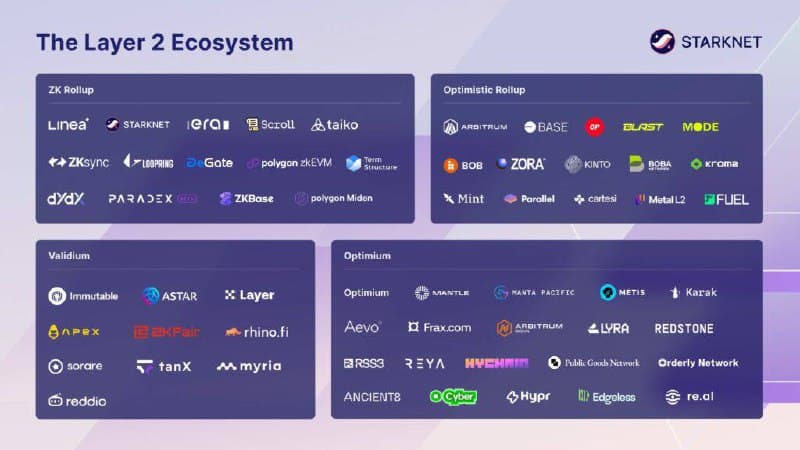
- Base (by Coinbase) — became a DeFi and social hub almost overnight
- Blast — attracted billions with its native yield offering
- Mode, Manta, Scroll, Linea — each carving out niches
- OP Stack and Arbitrum Orbit — frameworks that let anyone spin up an L2 in weeks
You can track all of them — TVL, risk assessments, technology choices — on L2Beat, the go-to dashboard for the L2 ecosystem.
The running joke became "everyone and their dog is launching a chain." And honestly? That's kind of the point. The vision is a future where applications run on purpose-built chains that all communicate with each other, settling back to Ethereum for security.
Whether we need hundreds of L2s is debatable. But the infrastructure to build them is now commoditized, and that's genuinely exciting.
Stablecoin Regulation Is Here
Stablecoins — crypto tokens pegged to fiat currencies like the dollar — have quietly become crypto's killer app. Tether (USDT) and Circle's USDC process more value transfer than many traditional payment networks.
Regulators finally noticed:
- MiCA (Markets in Crypto-Assets) rolled out in two phases: stablecoin rules (asset-referenced tokens and e-money tokens) took effect on June 30, 2024, and the full framework — covering all crypto-asset service providers — became fully applicable on December 30, 2024. Europe now has the clearest regulatory framework in the world.
- The US has been working on stablecoin-specific legislation, with bipartisan support in Congress. The debate centers on who gets to issue them (banks only? fintech companies too?) and what reserves they need to hold.
Why stablecoin regulation matters for everyone: It's the bridge between crypto and traditional finance. Clear rules mean more banks can offer crypto services, more businesses can accept stablecoins, and more people can use them for everyday payments. Boring? Yes. Important? Massively.
The Institutional Tsunami
The ETFs were just the beginning. The broader institutional adoption story of 2024-2025 includes:
- Strategy (formerly MicroStrategy) continued stacking Bitcoin aggressively, holding over 650,000 BTC as of late 2025 and becoming a de facto Bitcoin proxy in the stock market. Their playbook — issue debt to buy Bitcoin — spawned imitators worldwide. You can track their holdings in real-time on Saylor Tracker.
- El Salvador made history as the first country to adopt Bitcoin as legal tender in 2021. However, the experiment proved controversial — in 2024, as part of an agreement with the IMF, the country partially scaled back its Bitcoin involvement, and by 2025, Bitcoin was rescinded as legal tender. Research showed it was rarely used by the public, though Bukele's government remains Bitcoin-friendly.
- Banks like JPMorgan, Goldman Sachs, and Morgan Stanley began offering crypto products to wealth management clients.
- Sovereign wealth funds in the Middle East and Asia started making quiet allocations.
The narrative shifted from "should institutions own crypto?" to "how much crypto should institutions own?" That's a fundamental change.
Memecoins: The Controversial Front Door
We can't talk about 2024-2025 without addressing the elephant (or dog, or frog) in the room: memecoins.
From Dogwifhat to BONK to an endless parade of animal-themed tokens, memecoins became the most visible — and most controversial — onboarding mechanism for new crypto users.
The case for them: they're fun, they bring attention, and they teach people how wallets, DEXs, and blockchain work. More people set up their first crypto wallet for a memecoin than for any "serious" protocol.
The case against them: most go to zero, many are outright scams, and they make the entire industry look unserious. The political memecoins of early 2025 were particularly divisive.
My take? Memecoins are crypto's version of penny stocks — they've always existed in financial markets, and they always will. The key is to make sure new users who arrive for the memes stick around for the actual technology. That's on us as a community.
What's Coming Next
Looking ahead to the rest of 2026 and beyond, here's what I'm watching:
- Chain abstraction — The user shouldn't need to know (or care) which blockchain they're on. Projects like Particle Network and NEAR's chain signatures are making multi-chain interaction seamless. Imagine using apps that run on five different blockchains without ever noticing.
- AI agents on-chain — Autonomous AI agents that can hold wallets, execute trades, and interact with DeFi protocols. We're in the very early innings here, but the intersection of AI and crypto is generating real experimentation.
- Real-world adoption acceleration — Stablecoins for remittances in developing countries. Tokenized treasuries and real estate. Supply chain verification. The boring, world-changing stuff that doesn't make headlines but moves the needle.
- More ETFs — Solana, XRP, and other altcoin ETFs are in the pipeline. Each approval widens the funnel.
The Big Picture
If crypto's first decade (2009-2019) was about proving the technology worked, and its second phase (2019-2024) was about building the infrastructure, then this current era is about integration. Crypto is weaving itself into the existing financial system — not replacing it, not fighting it, but merging with it.
That's less romantic than the cypherpunk origins. But it's how transformative technologies actually win. The internet didn't replace phone companies — it absorbed them. Crypto is doing the same to finance.
Whether you're just getting started or you've been here since the Bitcoin whitepaper, we're living through the transition from "crypto is interesting" to "crypto is normal." And that — more than any price target — is the real milestone.
What's Next: You've seen where crypto is today. In Part 20, we'll get practical — how to actually get started safely, set up your first wallet, buy your first crypto, and avoid the most common mistakes that cost beginners money. No theory. Just a step-by-step guide to going from zero to your first transaction.
Stay Updated
Get notified about new posts on automation, productivity tips, indie hacking, and web3.
No spam, ever. Unsubscribe anytime.